
Lifting and haulage for the UK's utilities sector.
Water, wastewater and power sites are rarely built for a mobile crane to just roll in. Access lanes are narrow, the plant’s live more often than not, and an outage window is booked to the minute months in advance. HIAB work sits at the centre of what we do on utilities sites, because reach and restricted access matter more here than almost anywhere else. Buzzard runs the crane hire, contract lifting and haulage as one job, not three separate bookings, on utilities sites across the UK.
- No Obligation Quotes
- UK-Wide Coverage
- Fully Insured
- Google ★★★★★
TRUSTED BY





The operating environment.
Utilities sites rarely stop running for a lift, and rarely make it easy to get a crane there in the first place. Water, gas and electricity networks have to keep supplying customers while the work happens around them, so outages are planned in narrow windows and everything has to be ready before they open. Sites are often tucked into tight urban streets, substations or treatment works never designed with a crane in mind, with buried services, overhead lines and restricted headroom to work around. Access routes may need surveying and reinforcing before a crane gets near the lift, and every plan has to account for the public close by. Buzzard works within those constraints, so the lift happens in the window available.
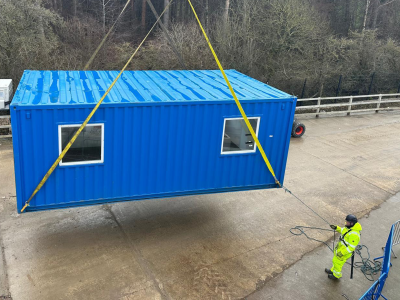
A lift on a live asset
Most of what we lift at a water, wastewater or power site happens with the rest of the asset live. Isolations and outage windows are fixed in advance, and the lift has to fit inside them, not the other way round.
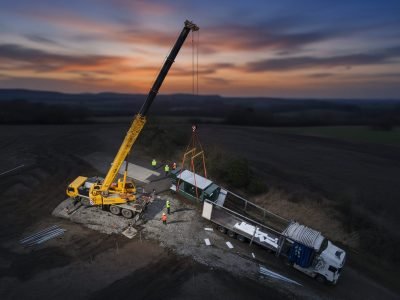
Confined and remote sites
Treatment works and substations aren’t always easy to get a crane to. Some plots are tight, some are miles from the nearest main road, and both change what capacity and access plan actually work.
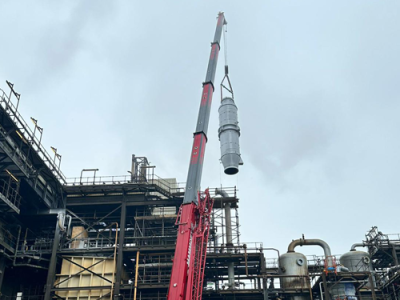
Restricted access lanes
Narrow lanes, weight-restricted bridges and unmade tracks rule out a lot of standard mobile crane routes before the job even starts. We route survey first, book the crane second.
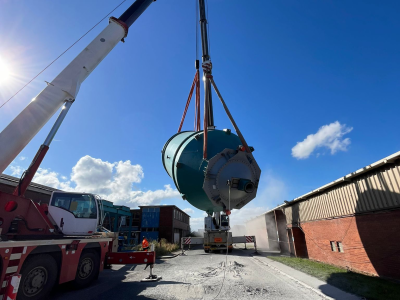
Statutory outage windows
An outage window on a live network is booked to the minute and doesn’t move for a late crane. We build the lift into that window from the start, not around it.
Road closures, permits and a public interface
Utility sites often sit next to a road, a footpath or a residential street. Closures, permits and a plan for the public go in before the first lift, not once someone’s complained.
Compliance that follows the asset, not just the crane
LOLER 1998 governs every lift we do, wherever it is. On utility sites we also work to the client’s permit-to-work and isolation procedures, coordinate outage windows with whoever owns the asset, and file RAMS and lift plans in the format their HSE team already uses.
Typical lifts we handle.
Six kinds of lift come up again and again across the UK’s utilities sites. Each one brings its own mix of access, headroom and outage timing, and each always demands a carefully built plan around a live network. Get the window wrong, and it’s not even just the lift that stalls, it’s the supply.
01
Transformer lifts
Distribution and substation transformers lifted and set to a plinth with very little tolerance for a re-lift.
02
Pump and genset replacement
Pumps and standby generators swapped out inside an outage window, old unit out and new one set in on one visit.
03
Tank and vessel installation
Storage tanks and process vessels lifted into treatment works where access rarely matches the load.
04
Screen and filter units
Inlet screens and filter units lifted into position on sites where headroom and access are usually the limiting factor.
05
Kiosk and cabin placement
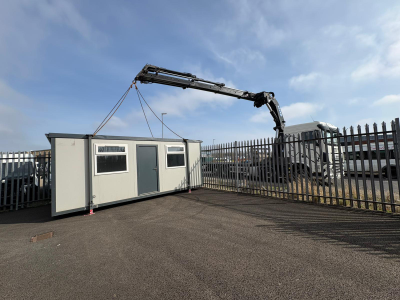
Switchgear kiosks and control cabins placed on plinths across distribution networks, often with no permanent crane access.
06
Storm tank works
Storm tank sections and covers lifted into position around a live network that keeps running through the works.
Our services on a utilities site.
On a utilities site, Buzzard brings crane hire, contract lifting and specialist haulage together as one coordinated operation. We plan every lift around the realities of a live network: outage windows, buried services, restricted access and the need to keep supply running throughout. From substations, treatment works and street-level upgrades, our team always manages the process end to end, giving clients a single point of contact instead of separate contractors.
Contract Lifting
A full lift plan and Appointed Person cover for transformer and tank lifts where an outage window won’t move.
Crane Hire
Crane capacity sized for confined and remote utility sites, not just open ground.
HIAB Hire
ALLMI-trained HIAB operators for the restricted-access work that makes up most utilities lifting.
Haulage
Abnormal load haulage for transformers, tanks and vessels, route survey done before the crane’s booked.
Specialist Personnel Supply
Appointed Persons, lift supervisors, riggers and slinger/signallers used to working live-asset sites.
Plant & Equipment Hire
Crane mats and rigging equipment sized for soft or remote ground, where standard bearing pressure figures don’t apply.
UTILITIES FAQ's.
Can you lift on a live utilities asset, not just a shutdown?
Yes. Most utilities work happens with the rest of the asset live. We plan the lift around the isolations and outage window in force that day, not around an assumption that the network has stopped.
Can you get a crane or HIAB into a restricted or remote site?
Yes. Narrow lanes, weight-restricted bridges and unmade tracks rule out a lot of standard routes, so we route survey before the crane’s booked rather than finding out on the day.
Can you work to a fixed statutory outage window?
Yes. An outage window is booked to the minute and doesn’t move for a late crane, so we build the lift into that window from the start.
Is HIAB hire relevant for utilities sites specifically?
Yes, more than most sectors. Reach and restricted access matter more on a treatment works or substation than open ground does, which is why HIAB work makes up a large share of what we do here.
Can you coordinate lifts around road closures and a residential public interface?
Yes. Where a utility site sits next to a road or a residential street, we plan closures, permits and a public interface before the first lift, not after someone’s complained.
Can you lift transformers, pumps and gensets to the tolerances utility sites need?
Yes. Send us the datasheet and the plinth details and we’ll size the crane and rigging properly, rather than working from a weight alone.
Got a transformer lift or an outage window booked? Let's plan it before the window opens.
One call gets you a crane, a lift plan and a haulage booking, coordinated by one team before you’re on site.