
Lifting and haulage for the UK's energy & renewables sector.
As the UK’s energy mix shifts toward renewables, the logistics behind it matter more than ever. Buzzard is equipped to support both established energy infrastructure and the next generation of renewable projects, with the same standard of safety and reliability our clients expect on every job
- No Obligation Quotes
- UK-Wide Coverage
- Fully Insured
- Google ★★★★★
TRUSTED BY





The operating environment.
Energy and renewables sites are still being built, not just operated. That changes what a lift plan needs to survive contact with the real site. Access roads may still be unmade, ground conditions can change week to week, and the site might look nothing like the drawings by the time the crane arrives. Other trades are usually working the same footprint at the same time, so the plan has to flex around a moving programme.
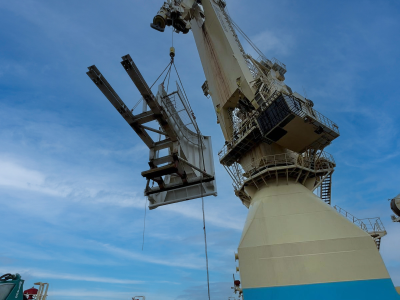
Bigger components, tighter windows
A monopile transition piece or an offshore transformer module doesn’t fit a lift plan written for standard plant kit. Capacity, headroom and slew radius all move up a category, and so does the planning behind them.
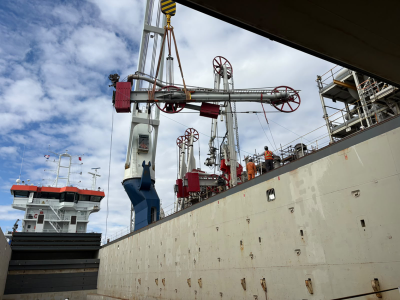
Quayside and laydown coordination
Offshore wind and marine energy sites often share a single quay between several contractors. We book crane positions and laydown slots the same way we book crews: in advance, and in writing.
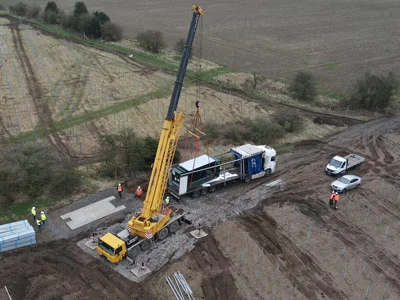
A site that changes shape monthly
Access roads move. Plots get fenced off. The lift plan from last month is often out of date by the time the crane arrives, so we revisit it before every mobilisation rather than just once at the start.
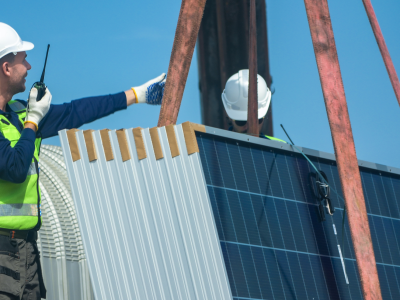
Multiple principal contractors, one plot
CCUS and hydrogen builds often have two or three principal contractors working the same footprint. Our Appointed Person coordinates directly with whichever one holds the plot that week.
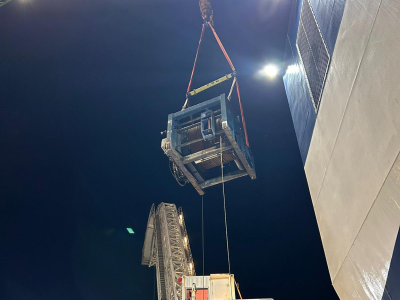
First-of-a-kind engineering
Some of this kit hasn’t been lifted in the UK before, so we plan for the delay that shows up somewhere in the programme instead of pretending it won’t. Lift plans get revised as designs are finalised, and that’s built into the schedule from the start.
Compliance that follows the plot, not just the crane
LOLER 1998 governs every lift we do, wherever it is. On new-build energy sites we also work within CDM 2015, take instruction from whichever principal contractor holds the plot, and file RAMS and lift plans in the format their HSE team already uses. No re-formatting halfway through a programme.
Typical lifts we handle.
Six kinds of lift come up again and again across the UK’s energy and renewables sites. Each one brings its own combination of weight, ground conditions and access, and each demands a plan built around a site that’s still under construction, not one that’s settled. Get the sequencing wrong, and the delay ripples through the programme.
01
Offshore wind components
A monopile transition piece or an offshore transformer module doesn’t fit a lift plan written for standard plant kit. Capacity, headroom and slew radius all move up a category, and so does the planning behind them.
02
Transformer and generator lifts
Setting a step-up transformer or a gas turbine generator onto its plinth is a precision job with very little tolerance for a re-lift.
03
Monopile and fabrication support
Turning, positioning and stacking large fabricated sections at monopile and turbine component facilities.
04
CCUS and pipeline plant
Vessels, compressors and pipe spools for carbon capture infrastructure, lifted into construction plots that get tighter as the build progresses.
05
Hydrogen plant construction
Electrolyser stacks, storage vessels and structural steel for hydrogen-scale builds across the country.
06
Substation works
Switchgear, transformers and cable drums for the substation infrastructure that connects new generation to the grid.
Our services on an energy and renewables site.
Six services, coordinated as one operation rather than six separate bookings. One project manager, one programme and one point of contact carry the work from planning through to completion, so nothing is lost as the site changes around it. Whether the programme shifts, ground conditions move or other trades need to work the same footprint, the same team adapts and delivers.
Contract Lifting
A full lift plan and Appointed Person cover for complex or first-of-a-kind lifts, from quay to plinth.
Crane Hire
Mobile crane capacity sized for monopile sections and transformer lifts, not just standard plant kit.
HIAB Hire
ALLMI-trained HIAB operators for materials moving on and off a laydown area that changes by the week.
Haulage
Abnormal load haulage for oversized components arriving by quay or by road, route survey done first.
Specialist Personnel Supply
Appointed Persons, lift supervisors, riggers and slinger/signallers who already know how a construction-phase site runs.
Plant & Equipment Hire
Crane mats and rigging equipment sized for soft or reclaimed ground, where standard bearing pressure figures don’t apply.
Energy and renewables FAQ's.
Can you lift offshore wind components like monopile sections?
Yes. We size crane capacity, ground bearing pressure and rigging around the actual component rather than a generic plant lift. Send us the drawing and dimensions for the section in question and we’ll come back with a lift plan, not just a quote.
Do you work within an active construction programme, not just a finished site?
Yes. Most of our work on energy and renewables sites is construction-phase. Access, laydown space and even the principal contractor can change between one visit and the next, so we revisit the lift plan before every mobilisation rather than trusting the one drawn up at the start.
What crane capacity do we need for a transformer or generator lift?
It depends on the transformer or generator, the plinth height and the ground it’s sitting on, which is why we ask for the technical drawing before quoting rather than working from a weight alone. Send us the datasheet and we’ll size the crane and rigging properly.
Can you coordinate lifts around a shared quayside or laydown area?
Yes. Where several contractors are working the same quay or laydown space, we book crane positions and access slots in advance and confirm them in writing, so your lift isn’t waiting on someone else’s delivery.
Do you handle CDM coordination with the principal contractor?
Yes. On new-build energy sites we take instruction from whichever principal contractor holds the plot that week, and RAMS and lift plans go in the format their HSE team already uses, not ours.
Can Buzzard support hydrogen and CCUS plant construction specifically?
Yes. Hydrogen and CCUS builds bring plant that hasn’t been lifted here before, and that needs a plan built around the kit rather than a standard one. Talk to us before you commit to a crane booking so the lift’s designed in, not bolted on afterwards.
Building an energy or renewables site? Let's plan the lift before the programme moves again.
One call gets you a crane, a lift plan and a haulage booking, coordinated by one team before you’re on site.